
Extreme Car Driving Legends
AxesInMotion RacingRacing
4.723.00 Reviews
- Version
- 0.0.4
- Installs
- 50.00K
- Age Rating
- Everyone
Screenshots
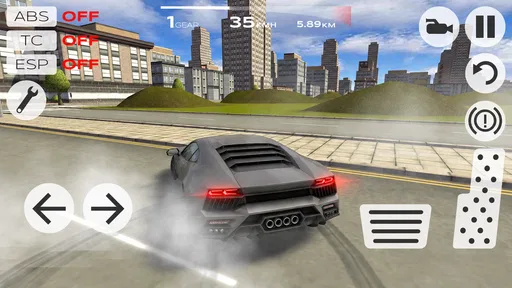
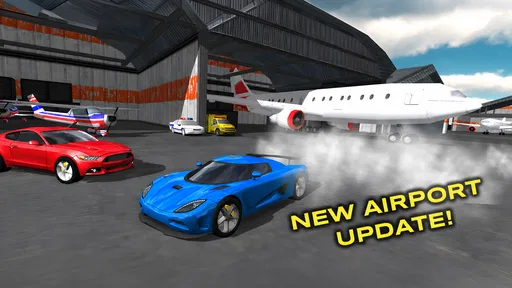
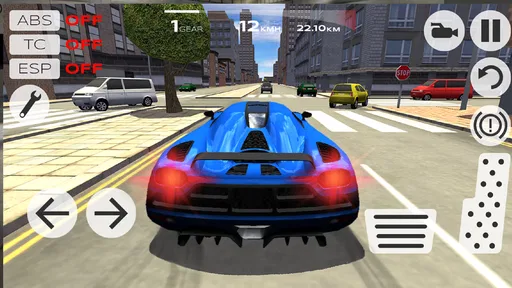
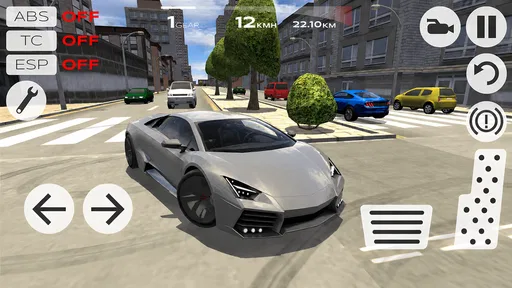
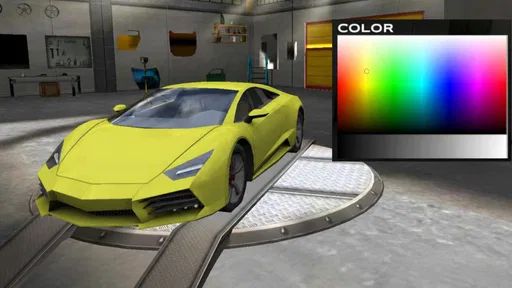
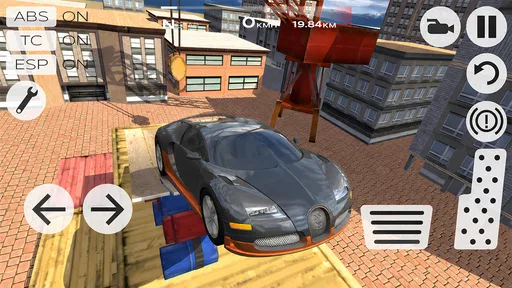
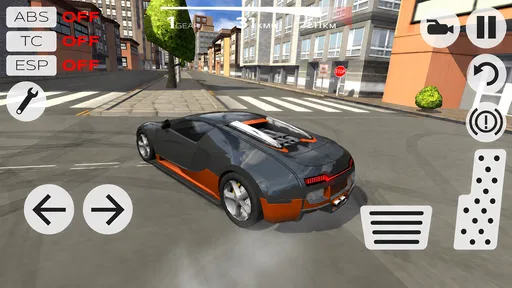
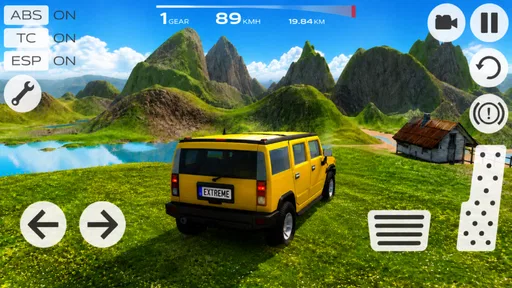
Our Review of Extreme Car Driving Legends
 Analysis by Appyee
I spent time with Extreme Car Driving Legends as a free open-world racing game, and my first impression was pleasantly simple: it wants me to drive, experiment, and enjoy the freedom of a car simulator without burying the experience under a complicated setup. That focus gives it an easy starting point, especially when I only have a few minutes and want something more relaxed than a structured race.
The game comes from AxesInMotion Racing and is presented as a return to the style of open-world car driving associated with the 2015 classic. I would describe it less as a serious motorsport simulator and more as a casual driving playground. That distinction matters. I do not approach every session looking for perfect racing lines or a deep championship campaign. I use it when I want to take a car out, test how it feels, and create my own short challenge.
Its current version is 0.0.4, it is free to start, and it carries an Everyone age rating. The Android requirement is 7.0 or later, so the compatibility barrier is fairly modest for many users. The game has an average rating of 4.7 from around 850 ratings, with more than 50 thousand installs, which suggests that its straightforward driving idea has found an audience without needing a huge amount of explanation.
What makes the first sessions work
The strongest early goal is simply learning the car and the space around it. Instead of forcing me through a long tutorial before I can enjoy myself, the open-world format makes the first minutes feel immediate. I can concentrate on steering, acceleration, braking, and the general rhythm of moving through the environment. For a player who is new to driving games, that low-pressure beginning is useful because it gives time to understand the controls before worrying about performance.
I also found that the game works best when I set a small personal objective. I might decide to reach a particular area without crashing, practise controlled turns, or see how confidently I can handle a route at speed. These are not goals I would confuse with a full career structure, but they give a short session shape. Without that self-imposed purpose, open-world driving can become aimless after the initial novelty fades.
That is the first important trade-off. The freedom is the attraction, but freedom also means the game does not always tell me what to do next. Players who enjoy making their own challenges will probably appreciate the breathing room. Anyone expecting a carefully staged sequence of races, explicit targets, and constant rewards may find the opening less motivating than a conventional racing game.
For everyday use, I can see myself opening it during a short break. I would not need to prepare for a tournament or remember a complex upgrade plan. I could drive for a few minutes, try one route, and close the game. That makes it approachable, although it also means the experience depends heavily on whether the basic act of driving is satisfying enough to carry a session by itself.
Progress is felt more through control than ceremony
One subtle strength is that improvement can come from the player rather than from a visible progression ladder. On a first attempt, I may overcorrect a turn or brake too late. After several runs, I begin to anticipate corners and manage speed more naturally. That kind of progress is easy to overlook because it is not necessarily presented as a dramatic unlock, but it is meaningful in a driving simulator.
I would not buy this expecting a clearly documented collection of cars, missions, or upgrade milestones. The confirmed presentation is centered on open-world driving, and my recommendation is based on that core rather than on promises of a large progression system. If your enjoyment depends on unlocking something after every short session, the game may feel light. If you enjoy mastering a route or creating a better run through practice, it has more to offer.
A useful way to approach it is to keep a mental list of driving exercises. I can practise smooth braking one session, work on corner exits another time, and then try to complete the same route with fewer mistakes. This turns the open world into a personal training area. It is a more rewarding workflow than simply wandering until the scenery stops feeling new.
That approach also helps answer a practical question: does the game require a racing background? I do not think it does. Beginners can enjoy the simple freedom of driving, while more experienced players can use the environment for informal practice. The difference is that experienced players may reach the limits of the available challenge sooner if they need competitive timing, detailed tuning, or a structured season to stay interested.
How the difficulty develops without becoming a campaign
The difficulty curve feels less like a staircase and more like a choice. I decide how aggressively to drive, which route to attempt, and how much room for error I am willing to accept. That makes the game approachable at the start, because I can slow down and learn without being pushed into a punishing event. It also means the challenge is partly self-directed rather than delivered through a sequence of increasingly demanding races.
This design suits players who dislike sudden difficulty spikes. I can repeat a section and adjust my style instead of immediately being locked out by a difficult objective. The downside is that there may be less tension for people who want the game to test them automatically. A structured racing title usually gives me a clear opponent, a target position, or a new event that raises the stakes. Here, I have to create more of that pressure myself.
My best advice is to avoid treating every drive as a speed test. Open-world car games often become more enjoyable when I alternate between fast runs and controlled exploration. Driving more carefully lets me understand the handling, while faster attempts reveal where I lose control. That simple alternation creates a natural difficulty curve even when the game itself is not constantly announcing one.
There is also a useful distinction between mechanical difficulty and attention difficulty. The controls may be easy to understand, but maintaining a clean run still requires concentration. If I am distracted, small mistakes accumulate quickly. For that reason, the game can work as a casual experience, but it is not completely passive. I get more from it when I give the drive a specific focus.
Where the pacing holds attention and where it slows
The pacing is strongest in short bursts. The open-world format allows me to begin driving quickly, and the lack of a heavy preamble makes the game convenient when I want immediate action. I can use a brief session to test a route or simply enjoy the movement. That accessibility is one of the clearest reasons I would recommend trying it.
Longer sessions are more dependent on personal motivation. In a race-focused alternative, the next event, rival, or reward often supplies the reason to continue. In this game, the drive itself has to remain interesting. If I need a constant sequence of new objectives, I may feel the pace flatten after the initial exploration. If I enjoy repeating a route to improve my control, the same openness becomes an advantage.
The retention pressure is therefore gentle rather than aggressive in the way I experience it. I am not drawn forward solely by a long checklist; I return when I want the relaxed feeling of driving or when I have a small skill goal in mind. That makes it less demanding than many competitive racing games, but it also makes the long-term appeal more personal and less guaranteed.
In-app purchases range from $0.99 to $99.99 per item. Because the game is free to start, I would recommend playing the basic experience first and deciding whether it gives me enough value before considering any purchase. I would not treat spending as a solution for boredom. If the open-world driving itself is not holding my attention, buying additional content would not change the central question of whether this style suits me.
This is also where parents may want to set expectations. The age rating is Everyone, which makes the game broadly accessible, but free games with optional purchases still deserve normal device-level purchase awareness. I would be comfortable introducing it as a simple driving game, while making sure accidental purchases are protected if a child is using the device.
How it compares with other racing choices
Compared with an arcade racer built around quick events, this game feels less urgent and less competitive. I do not choose it when I want a tightly scripted contest that tells me exactly where to go and what I must beat. I choose it when I want room to drive without the pressure of a countdown or a crowded race.
Compared with a serious simulator, it is easier to approach but less suitable for someone seeking detailed realism. A dedicated simulation game is usually the better choice for players who care about technical vehicle behaviour, disciplined race procedure, and a deep setup process. Extreme Car Driving Legends is more inviting when I want the idea of simulation without turning every session into study.
It also differs from a stunt-focused driving game. If my main goal is spectacular jumps, elaborate obstacle courses, or constant visual surprises, another option may provide a stronger stream of events. Here, the open-world driving foundation matters more than a nonstop sequence of set pieces. That gives it a calmer identity, but it asks me to appreciate ordinary driving rather than only dramatic moments.
The most important comparison is with other open-world car games. Larger alternatives may offer more visible progression, more variety, or a stronger social and competitive layer. This title is easier to understand and less intimidating. I can install it, start driving, and decide quickly whether the handling and freedom appeal to me. For someone who values a compact, uncomplicated entry point, that simplicity is a real benefit.
Small habits that make the game more rewarding
I get better results when I treat each session as a short experiment. Before driving, I choose one objective: keep a clean line, learn a turn, explore a new stretch, or maintain control at higher speed. This prevents the open world from feeling empty and gives me a clear reason to continue for another few minutes.
Another useful habit is to repeat the same route immediately after a mistake instead of constantly moving elsewhere. The second attempt tells me whether the problem was speed, steering, or simply a lack of familiarity. That kind of comparison is more informative than wandering randomly, and it turns the game into a practical way to improve driving-game control.
I also recommend separating exploration from challenge. On an exploratory run, I slow down and learn the surroundings. On a challenge run, I focus on one route and accept that mistakes are part of the test. Mixing both intentions at once can make a session feel unfocused. Keeping them separate gives the open-world design a clearer rhythm.
Finally, I would avoid judging the game after only one rushed attempt. Its appeal is not necessarily a dramatic first-minute spectacle. The better question is whether I enjoy returning to the same driving space with a slightly sharper sense of control. If the answer is yes, the modest presentation becomes easier to appreciate. If the answer is no, the lack of a stronger progression framework will probably become noticeable quickly.
Who should install it
I think this is a good fit for someone who wants a free open-world driving game that starts quickly and does not demand racing expertise. It is especially suitable for short, casual sessions, relaxed exploration, and players who like setting personal challenges. The Everyone rating and Android 7.0 minimum also make it a practical option for a broad range of compatible devices.
I would be more cautious recommending it to players who need a deep career mode, a clear unlock schedule, highly technical simulation, or constant competitive pressure. Those players are likely to feel that the open-world freedom does not provide enough direction on its own. A conventional racer may be a better match when the satisfaction comes from beating defined events rather than shaping the session personally.
Device performance can affect any driving game, so I would keep expectations sensible on older hardware even though the operating-system requirement is not especially demanding. Smooth control matters more here than it might in a menu-heavy game. If steering feels delayed or the display becomes uncomfortable during longer drives, that will undermine the experience faster than a missing feature would.
For me, the game’s value comes from its clear identity. It is not trying to be every kind of racing title at once. It offers an open space, a car, and the freedom to decide whether the next few minutes are about exploration, practice, or simply moving through the world. That narrow focus is both its appeal and its main limitation.
My verdict on the progression and pacing
After playing it, I see Extreme Car Driving Legends as a relaxed driving playground rather than a progression-heavy racing campaign. Its early goals are easy to understand, its progress can be felt through improved control, and its difficulty is largely shaped by the challenges I set for myself. That makes the experience welcoming, but it also means the game cannot rely on a long chain of visible rewards to keep every player engaged.
The free entry point makes trying it straightforward, and the strong average rating of 4.7 gives it a reassuring first impression. I would still approach the optional purchases carefully and decide based on how much I enjoy the core driving. For a player who wants immediate open-world car action and values freedom over a busy checklist, it is worth a download.
My final recommendation is simple: install it if you want a calm, accessible way to drive and create your own small challenges. Skip it if your ideal racing game must provide a deep career, demanding competition, or constant unlocks. When I use it on its own terms, the uncomplicated design is refreshing. It gives me enough room to practise, explore, and enjoy the drive without pretending to offer a structure that is not central to its appeal.
Verdict
Strengths of Extreme Car Driving Legends
- Large open-world map with varied roads and areas to explore.
- Responsive controls make drifting and sharp turns enjoyable.
- Wide selection of cars with different handling characteristics.
- Free-roaming gameplay lets you drive without strict race limits.
- Offline play is useful when you have no internet connection.
Limitations of Extreme Car Driving Legends
- Frequent ads can interrupt gameplay and reduce immersion.
- Some vehicles and upgrades require considerable in-game grinding.
- Graphics may look dated on newer phones and tablets.
- Traffic and AI behavior can feel predictable after extended play.
- Steering can be difficult to control until the sensitivity is adjusted.
Other Releases by AxesInMotion Racing
View All
Extreme Car Driving Simulator
Racing4.3

Highway Moto Rush: Traffic
Racing4.4
Similar Picks in This Category
View All
Hill Climb Racing
Fingersoft4.3

Dr. Driving
SUD Inc.4.2

Traffic Rider
skgames4.5

Asphalt 8 - Car Racing Game
Gameloft SE4.6

Race Master 3D: Car Racing
Beresnev Games4.6
Extreme Car Driving Simulator
AxesInMotion Racing4.3
Frequently Asked Questions
What is Extreme Car Driving Legends?
Extreme Car Driving Legends is a driving game focused on open-world exploration, car control, and stunt-style challenges. Players can drive through expansive environments, perform jumps and drifts, complete different activities, and experiment with vehicle handling. It is designed more for free driving and entertainment than for a strict, realistic racing simulation, making it suitable for players who enjoy casual car games.
Can I play Extreme Car Driving Legends offline?
The game may offer offline access to its main driving features, allowing you to explore and practice without a constant internet connection. However, some functions can depend on connectivity, including advertisements, online services, updates, or other optional content. It is best to launch the game once while connected, then test the available modes in airplane mode before relying on it during travel.
Does Extreme Car Driving Legends include different cars and customization options?
Extreme Car Driving Legends generally provides several vehicles or unlockable driving options, giving players a chance to try different styles of handling and performance. Depending on the version installed, customization may include visual changes, upgrades, or vehicle selection rather than highly detailed tuning. Progression can require completing activities, earning in-game rewards, or watching optional advertisements.
Is Extreme Car Driving Legends suitable for children?
The game is easy to understand because its main controls are based on steering, acceleration, braking, and performing driving maneuvers. Nevertheless, parents should check the current age rating and store listing before installation. Advertisements, optional purchases, and the excitement of crashes or reckless driving may not suit every child, so parental supervision and device purchase restrictions are recommended.
Does Extreme Car Driving Legends require a powerful phone or tablet?
Because it features 3D vehicles, open environments, and real-time driving, performance can vary considerably between devices. Recent mid-range phones and tablets should usually provide a smoother experience, while older or entry-level hardware may show lower frame rates, longer loading times, or occasional stuttering. Closing background apps and lowering available graphics settings can help improve stability.
Play our best games!


